• While some of us may have a different story, most of us are products of our background. The homes we grew up in, the voices that corrected us, the hands that guided us, and the values repeated until they became instinct all helped shape who we are. Our parents, guardians, and environments planted the first seeds of our identity. They taught us what is right and wrong, what is acceptable and what is not. In many ways, our early lives were not entirely our own; they were inherited.

    But then life shifts.

    As we grow older and gain independence, our choices begin to matter more than our upbringing. The values, beliefs, and habits we learn from our families give us a foundation, but they do not control our future. We choose the people we spend time with, the habits we develop, and the direction we pursue. Over time, those choices either strengthen what we were taught or slowly pull us away from it.
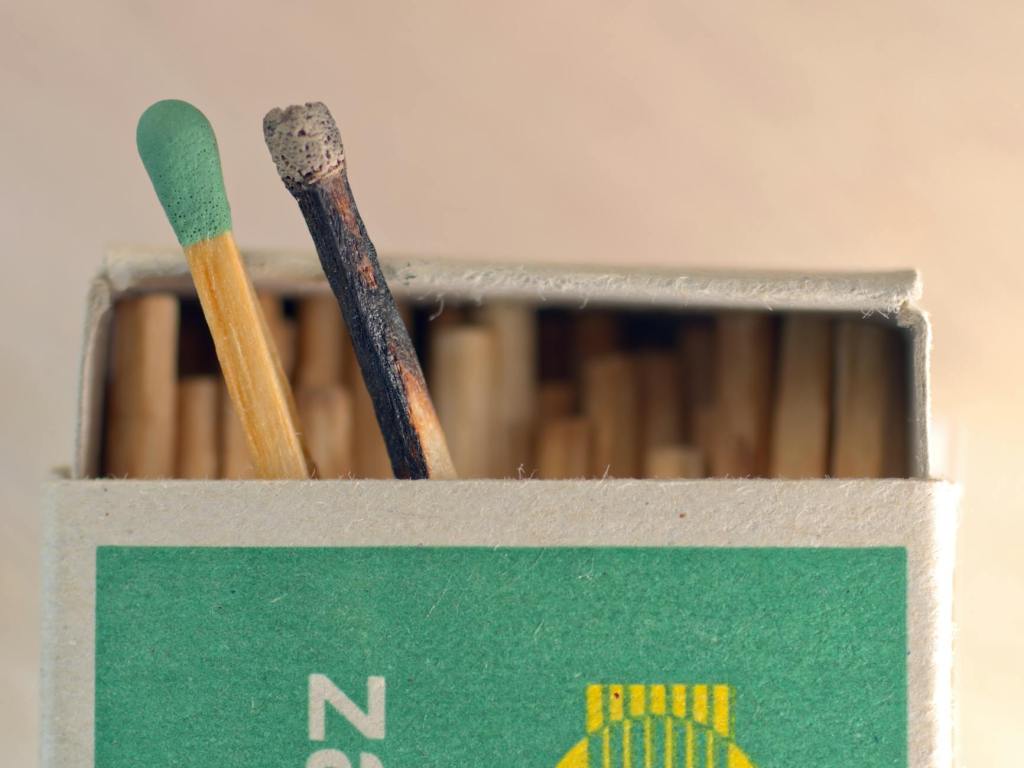
    This truth works both ways. A good foundation is an advantage, not a guarantee. A difficult beginning is a challenge, not a life sentence. People can rise above their circumstances, and they can also walk away from the values they were given. Our background may influence us, but it does not imprison us
    What we repeatedly expose ourselves to eventually shapes us.

    The conversations we entertain, the content we consume, the habits we tolerate, and the influences we allow into our lives are never completely neutral. They slowly shape our thinking, our character, and eventually our identity. What is repeated often becomes familiar, and what becomes familiar often begins to feel normal.

    There is freedom in realizing that you are not bound to your background. But there is also responsibility. Because it means that, moving forward, your life becomes increasingly shaped by your own decisions. At some point, you can no longer give all the credit to your upbringing, nor can you place all the blame on it.

    Your background may introduce you to life, but your decisions define how you live it. The foundation you were given matters, but the structure you build on top of it is your responsibility.

    So the question is no longer: Where did you come from?

    The real question is: What are you choosing now?
  • I have come to recognize something without pretending that I have mastered it.

    Most men, if they are honest, are drawn to structure. Not oppression โ€” structure. Something ordered. Something defined. A system where roles are clear and leadership is visible. There is a kind of stability in that design. It feels ancient. It feels grounded. It feels like something that once worked without needing to be explained.

    But reality does not ask what once worked. Reality asks what works now.

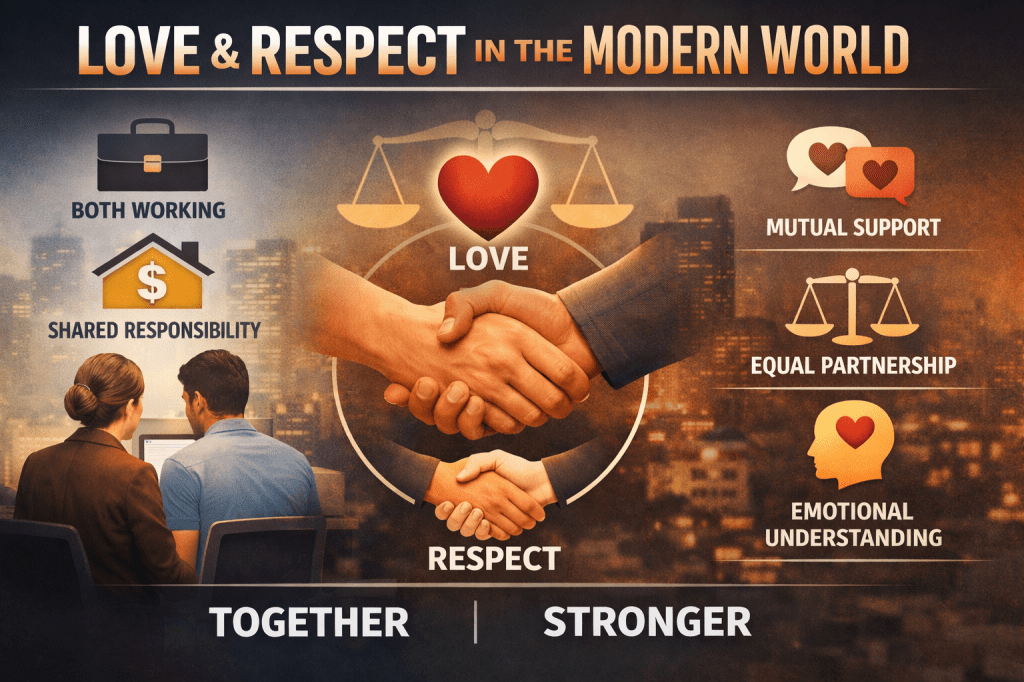
    Life has changed. Survival has changed. The economy has changed. We no longer live in a time where one person can carry the entire financial burden without strain. In many homes today, both are working. Both are striving. Both are enduring pressure from the outside world before they even walk back through their own front door.

    And here is where my thoughts begin to wrestle.

    If both are carrying weight, then respect cannot be defined the same way it was when responsibilities were divided differently. It cannot be rooted only in position. It cannot be enforced simply because tradition once allowed it. Because when the structure shifts, the expression must adjust.

    Yet I do not believe respect should become negotiable. Respect does not shrink because society modernized. Respect should not be withheld because roles evolved. It is not a favor we give when convenient. It is a foundation.

    But maybe what changes is not respect itself โ€” it is how we live it.

    In the past, respect may have looked like obedience and authority. Today, it may need to look like acknowledgment and partnership. It may need to sound like listening. It may need to feel like shared responsibility rather than silent expectation.

    To suppress someone who is also striving beside you is not strength. It is insecurity hiding behind tradition. Love alone cannot carry that imbalance. Love without dignity eventually suffocates. Love without mutual honor begins to feel heavy.

    I am not rejecting order. I am not dismissing masculinity. I am not discarding the desire for leadership.

    I am simply acknowledging that leadership in this era may require more emotional intelligence than control. More collaboration than command. More awareness than assumption.

    Perhaps the real question is not who stands above. Perhaps it is how two people stand together when the world is demanding everything from both of them.

    I may still be refining the language. But I know this: respect is not smaller than love. It is deeper than it. And in this modern world, if it is not mutual, it will not survive.

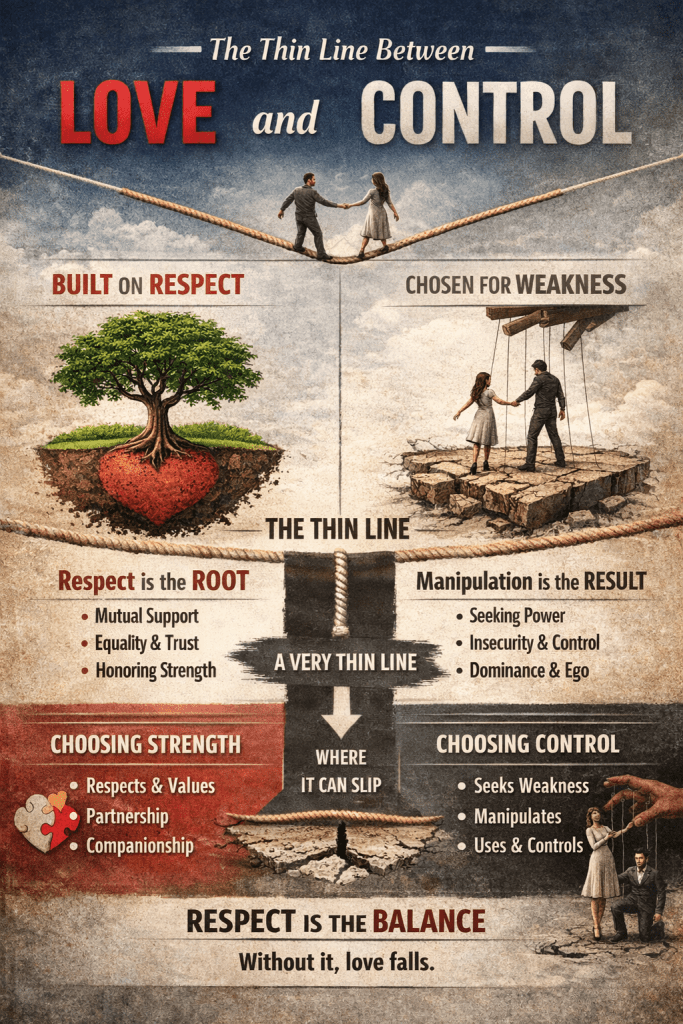
  • Love does not come before respect. It is built from it. Respect is the foundation, and love is what grows out of that foundation. When the foundation is weak, what people call love often turns out to be something else โ€” attachment, insecurity, control, or the fear of being alone.

    There is a very thin line between loving someone and choosing someone you secretly believe is weaker than you. Sometimes people choose partners they feel they can control, influence, or stand above. Many do not notice this line, but it exists. And when love is built on imbalance, it slowly turns into manipulation. Real love does not look for someone to dominate. It honors strength and meets it with strength.

    Relationships, whether we admit it or not, operate within structure. Masculine and feminine dynamics function within order. For a woman to truly respect a man, she must internally place him in a position she believes is worthy of respect. The same applies to a man. He cannot genuinely remain with a woman he does not respect. This is not about ego or pride; it is about natural order.

    Everywhere in life there is a chain of command. In the army, there is structure. In the workplace, there is hierarchy. In families, there is leadership. Even in spiritual systems, there is order. Structure has always existed. It is not something new, and it is not something we invented for relationships. It is part of how systems survive.

    Most people enter relationships wanting companionship, not competition. They want partnership, not rivalry. But when respect is unclear and positions are constantly questioned, competition quietly begins. When there is competition, there is little peace. When both people are fighting for control or recognition, reciprocity weakens. Love cannot grow in a constant power struggle.

    This does not mean every relationship fails because of hierarchy. But many problems start when respect shifts. If the internal pedestal someone once placed you on is moved, their behavior changes. Disrespect is often a sign that admiration has already been relocated.

    When a man meets a woman or a woman meets a man, beyond attraction there is a silent question inside them: Can I respect this person? It may not be spoken out loud, but it is there. A woman does not truly desire to stay with a man she cannot respect. A man does not truly desire to stay with a woman he cannot respect. Because respect brings stability. Without it, emotions become unstable.

    We rank things in every area of life. We compare, we measure, we speak of better and greater. Hierarchy is part of how humans understand the world. To pretend it does not exist in relationships is to ignore reality. The real issue is not hierarchy itself, but whether it is healthy and mutual.

    When structure becomes domination, it destroys. But when structure is understood and respected by both people, it creates balance.

    So I return to the first statement: love does not come before respect. It grows from it. If someone is constantly asking for respect inside a relationship, then something essential was never firmly built. Because real love does not beg for what should have existed from the beginning.