

There comes a point in life where growth quietly hands responsibility back to you.
As children, we are shaped—deeply, undeniably—by our background. The homes we grow up in, the voices that correct us, the hands that guide us, the values that are repeated until they become instinct. Our parents, guardians, and environments plant the first seeds of who we are. They teach us what is right and wrong, what is acceptable and what is not. In many ways, our early life is not fully ours—it is inherited.
A disciplined home often produces a disciplined child. A home rooted in faith often raises a child who knows reverence. A home filled with chaos may raise a child who learns to survive before they learn to live.
At that stage, we are, without question, a product of our background.
But then life shifts.
Adulthood arrives—not just as age, but as autonomy.
And with it comes a subtle but life-altering transition: the moment you begin making decisions without supervision, without correction, and sometimes without consequence in the immediate sense. You begin to choose your circle, your habits, your indulgences, your discipline—or lack of it.
From that point forward, something changes.
You are no longer just what you were taught.
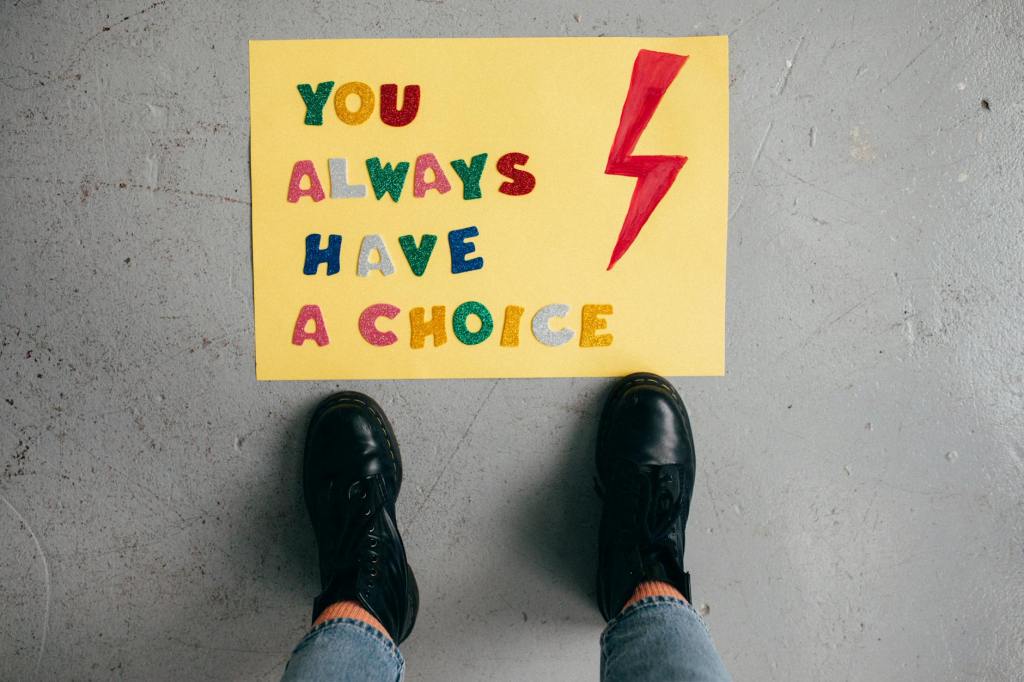
You become what you choose.
When Influence Becomes a Choice
Take, for instance, a young woman raised in a morally upright, God-fearing home. She has been taught respect, discipline, and self-worth. In her parents’ house, there were boundaries. There was structure. There were expectations.
For years, her character reflected that foundation.
But then she moves out.
Now, there is no one to question the time she gets home. No one to monitor the company she keeps. No one to correct her decisions in real time.
At this point, her life begins to reveal a deeper truth:
Will she continue in what she was taught, or will she redefine herself through her choices?
If she surrounds herself with people who disregard the values she was raised with, over time, her behavior may begin to shift. Not because her background failed—but because her present decisions took precedence.
And the same applies in the opposite direction.
A young man raised in a difficult or unstable environment may step into independence and choose discipline. He may choose better friendships, better habits, and a better path altogether. In doing so, he slowly detaches from the limitations of his background and builds a new identity through intentional living.

Necessary Clarification
This truth does not ignore the reality that people can defy their beginnings.
There are those who are raised in broken, unstable, or morally compromised environments—and yet, against all odds, they choose a different path. They rise above what they were exposed to. They become disciplined where there was chaos, principled where there was confusion, and grounded where there was instability.
And in the same breath, there are those who are raised in structured, loving, and morally upright homes—yet choose a path that contradicts everything they were taught. They walk away from values, not because they were never given, but because they were not sustained.
This is the paradox of human choice.
Your background introduces you to a direction—but it does not imprison you in it.
A good foundation is an advantage, not a guarantee.
A difficult beginning is a challenge, not a life sentence.
Which means this:
No matter where you come from, there comes a point where your life begins to reflect not what you were given—but what you chose to keep, what you chose to reject, and what you chose to become.

The Quiet Power of Indulgence
What we repeatedly expose ourselves to eventually shapes us.
Not suddenly—but steadily.
The music you constantly listen to, the conversations you entertain, the content you consume, the habits you tolerate—these are not neutral. They are formative.
A person who continually indulges in environments that normalize irresponsibility will, over time, become comfortable with irresponsibility.
A person who consistently chooses growth—even when it is uncomfortable—will begin to reflect that growth in their character.
This is how identity evolves in adulthood.
Not by force.
But by repetition.
You Are Not Bound—But You Are Responsible
There is a freedom in realizing that you are no longer bound to your background.
But there is also a weight to it.
Because it means your life, moving forward, is largely a reflection of your decisions.
You cannot always credit your upbringing for who you become—and you cannot always blame it either.
At some point, the responsibility becomes personal.
You choose who you listen to.
You choose what you normalize.
You choose what you tolerate.
You choose what you become.
A Simple Truth to Carry Forward
Your background may introduce you to life.
But your decisions define how you live it.
And while the foundation you were given matters, the structure you build on top of it is entirely your own.
So the question is no longer: Where did you come from?
The real question becomes: What are you choosing now?


Leave a comment